I sell bathroom barn doors. And this is one of those questions where people overthink it - or don't think about it at all. Both are problems.
Let me tell you what I've seen. Last year a guy orders a solid oak door, 2 inches thick. Beautiful thing. Heavy as sin. He pairs it with a basic roller kit. Three months later he calls me - the door is sagging, the wheels are flat on one side, and it's dragging on the floor. He had to buy new hardware anyway. Would've been cheaper to just get the right rollers from the start.
So here's the real breakdown.
Small bathroom? 1 to 1.25 inches. That's your sweet spot. It slides easy, doesn't take up much room when it opens, and you don't need a monster track to hold it. I've put these in half-baths and tiny master baths. They work.
Bigger bathroom - say you've got a soaking tub and a double vanity - you can go 1.5 to 2 inches. Feels more solid. Blocks more sound. But now you're in Heavy Duty Barn Door Rollers territory. Don't skip that part. A thick door on cheap wheels is a bad combo.
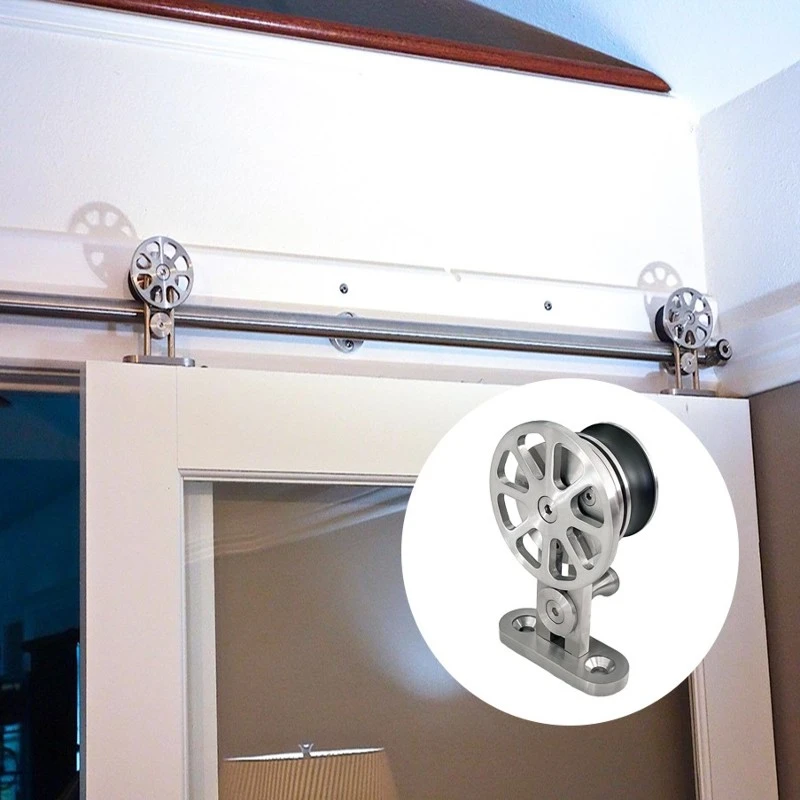
Over 2 inches? Rare in a bathroom. You'd need commercial-grade hardware and a wall that can take the weight. Most people don't need that.
Moisture is the other thing nobody asks about. Bathrooms are humid. A Brushed Silver Barn Door System handles that better than painted steel. The silver finish doesn't rust as fast. Silver Barn Door Hardware also works if you want something simpler and still corrosion-resistant.
Style matters too. A thin door looks sleek in a modern bathroom. A thick door feels right in a farmhouse or traditional space. There's no wrong answer - just different looks.
But measure your door before you buy hardware. Most kits list a thickness range. If yours is on the edge, ask. I've had people force a 2-inch door into brackets meant for 1.5 inches and then wonder why it wobbles.
Tell me your bathroom size and what look you're after. I'll tell you what thickness makes sense. No sales pitch. Just what I've learned from shipping these things every day.